
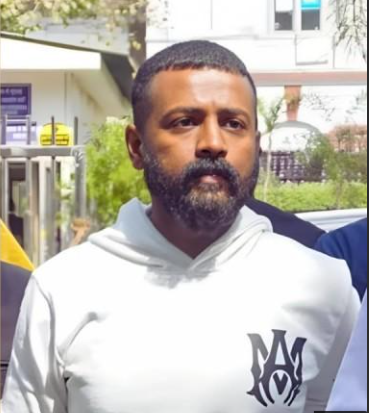
Who Is Sukesh Chandrasekhar?
Sukesh Chandrasekhar is a convicted conman currently lodged in a Delhi jail, facing more than 20 cases of fraud and extortion filed against him across the country. He has been in and out of custody since his teenage years, and is best known for a multi-crore extortion case involving the wives of several influential businessmen, along with a widely reported case involving expensive gifts given to Bollywood actress Jacqueline Fernandez.
This context matters when discussing his ‘net worth,’ because unlike a legitimate businessperson or public figure, the wealth associated with Chandrasekhar is, according to law enforcement, largely alleged proceeds of crime rather than legitimately earned or verified assets.
What He Has Publicly Claimed
In a widely reported letter to the Finance Minister in early 2025, Chandrasekhar claimed to own two international businesses — LS Holdings International in Nevada and Speed Gaming Corporation registered in the British Virgin Islands — reportedly generating a combined turnover of $2.70 billion in 2024, and offered to pay roughly ₹7,640 crore in tax on this declared income.
Business Today and other outlets that reported on this letter explicitly noted they could not independently verify the letter’s authenticity or the underlying financial claims. No court or regulatory body has confirmed these figures, and the claims remain, in the words of multiple news reports, entirely uncorroborated.
What Has Actually Been Documented
In contrast to the multi-billion-dollar figures he has personally claimed, what’s actually been documented through law enforcement action is far more modest. Reports describe Chandrasekhar as owning 85 luxury watches valued around ₹18 crore and 54 cars worth approximately ₹35 crore, along with various properties and cash seized during investigations.
The Enforcement Directorate (ED) has attached specific assets tied to his alleged crimes, including gifts and properties worth several crore rupees given to Bollywood actresses, a beachfront property, cash, gold, and luxury vehicles seized in connection with a roughly ₹200 crore extortion case.
The Jacqueline Fernandez Connection
Part of what brought national attention to Chandrasekhar’s alleged wealth was the ED’s investigation into gifts given to actress Jacqueline Fernandez, including fixed deposits, funds transferred through hawala channels, and various luxury items. The ED formally attached assets worth roughly ₹7.27 crore linked to Fernandez, characterising them as proceeds of crime.
Fernandez was questioned as a witness rather than an accused in the case, and has stated she was unaware of Chandrasekhar’s background when she received the gifts. Other public figures, including actress Nora Fatehi, were similarly questioned regarding gifts received from him.
Why ‘Net Worth’ Is a Misleading Frame Here
For a legitimate businessperson, net worth typically reflects verifiable assets minus liabilities, often backed by audited financials or public market valuations. In Chandrasekhar’s case, the figures most widely circulated — running into thousands of crores — come almost entirely from his own self-declarations, which multiple news organisations have explicitly flagged as unverified and, per law enforcement’s own characterisation, likely fabricated to project false influence and wealth as part of his fraud schemes.
Some financial profile sites covering his case note plainly that there’s no credible reporting confirming billionaire status, and that his lifestyle purchases — while real and seized by authorities — don’t add up to anywhere near the figures he’s personally claimed in letters and public statements.
The Broader Lesson in This Case
Chandrasekhar’s case is frequently cited as a cautionary example of how convincingly fabricated wealth and influence can be used to defraud even sophisticated, high-profile victims. His pattern, according to court filings and reporting, involved impersonating powerful officials and using the appearance of extreme wealth and connections to extract money from victims who believed he could resolve serious personal or legal problems for them.
This underscores why claims of extreme wealth — particularly from an individual actively facing fraud charges — deserve significant scepticism rather than face-value acceptance, regardless of how specific or confident the stated figures sound.
Final Thoughts
Sukesh Chandrasekhar’s claimed net worth runs into the thousands of crores by his own account, but almost none of this is independently verified, and what has actually been documented by law enforcement — seized watches, cars, cash, and attached properties — represents a small fraction of his self-declared fortune. Given his ongoing legal cases and the explicitly unverified nature of his claims, any ‘net worth’ figure associated with him should be read as a disputed allegation rather than an established fact.
This case is a useful reminder for readers generally that a figure who is actively facing serious fraud charges has a direct incentive to project an image of extreme wealth and influence, which is precisely why journalists and financial profile sites covering his case have been consistently careful to flag his self-declared numbers as unconfirmed rather than repeating them at face value.